How I learned Data Science to disrupt a $113B market
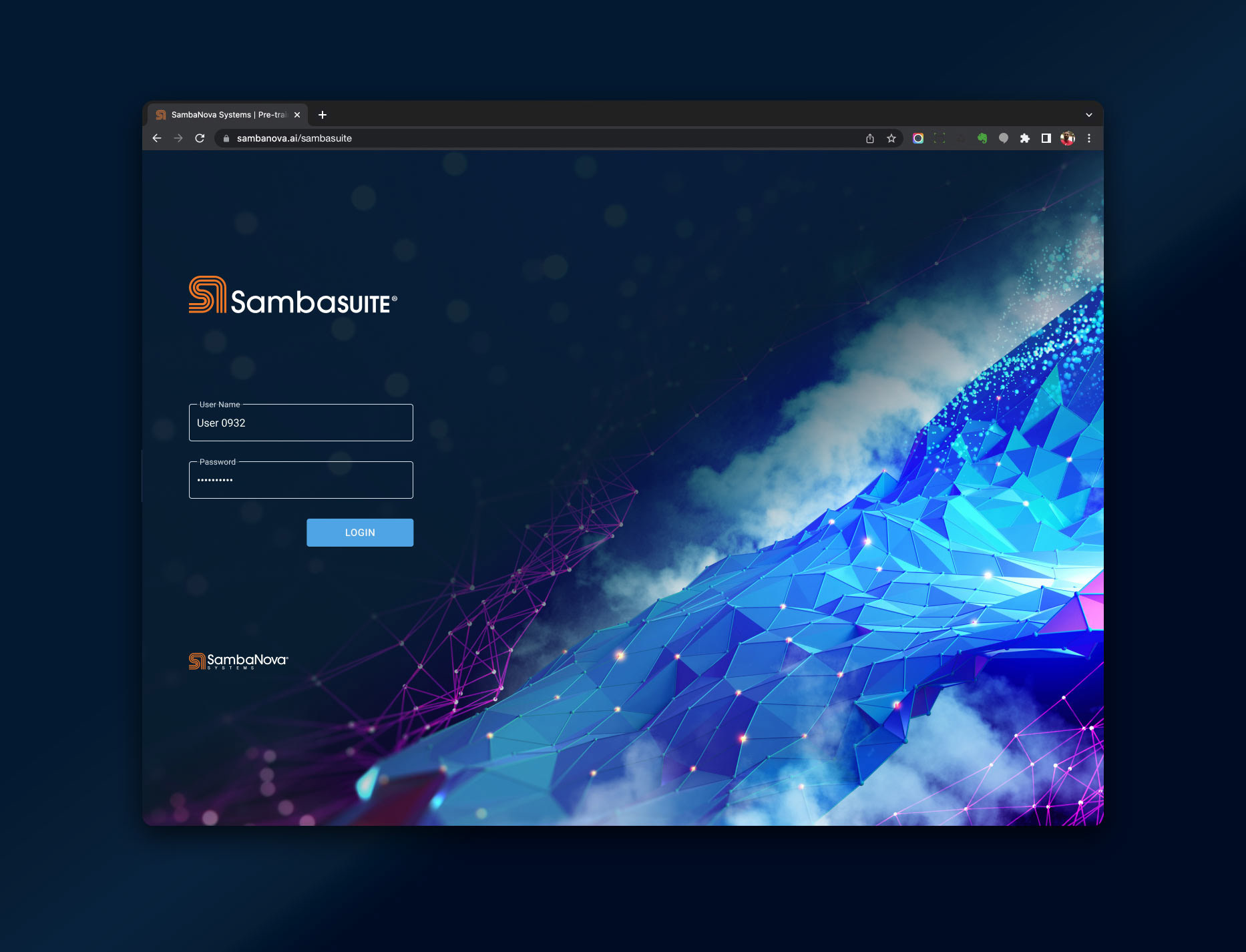
Samba Suite
for Sambanova Systems
(6:30 min read)
PROBLEM:
SambaNova had raised $676M but had no design culture, no software product, and a user base that ran complex ML experiments exclusively through command-line interfaces, thereby limiting its market to thousands of experts rather than millions.
SOLUTION:
Designed SambaStudio from 0 to 1, a no-code ML platform with a full design system, making enterprise-grade machine learning accessible to non-technical users for the first time.
OUTCOME:
Estimated 70%+ reduction in workflow complexity · Shipped in 14 months · $5.1B valuation company
METADATA:
Lead Designer & Researcher · Hired & managed 2 designers14 · months · Desktop · AI/ML · Enterprise
In October 2021, I joined SambaNova Systems as their first product designer at a $5.1B AI company with world-class engineering talent, no design process, and an urgent need to expand its hardware business into a SaaS product. The challenge was clear: build enterprise ML software from scratch for a user base of data scientists who lived at the command line, within a company that had never shipped consumer-facing software before. I had four things going for me: a mandate from the C-suite, access to all stakeholders, no legacy design decisions to undo, and a problem worth solving.
INTRODUCTION
SambaNova is working to create an AI platform for businesses. The company targets companies that want to integrate sophisticated AI systems into their business yet lack the resources to develop and maintain in-house Data Science teams.
It was April 2021, and after raising $676M at a $5.1B valuation and four years of uninterrupted growth, SambaNova Systems decided it was time to expand its offer beyond hardware, creating its first software to run Machine Learning experiments, as even with this funding round, their runway had an expiration date.
It was April 2021, and after raising $676M at a $5.1B valuation and four years of uninterrupted growth, SambaNova Systems decided it was time to expand its offer beyond hardware, creating its first software to run Machine Learning experiments, as even with this funding round, their runway had an expiration date.

SambaNova's original offer was based on hardware deployment for Machine Learning.
THE TOUGH STARTING POINT
The company had a foundational hardware focus from its inception, and its teams didn't have software development experience. At that point, they decided to bring the first product designer to lead the effort to create DaaS (Data-flow-as-a-Service) software from scratch.
I was recruited in Q3 of 2021 and joined the company in October, based on my previous experience solving high-end, complex problems and creating big-impact solutions.
I was recruited in Q3 of 2021 and joined the company in October, based on my previous experience solving high-end, complex problems and creating big-impact solutions.
From the beginning, it was clear that the company's potential users needed to be satisfied. I needed to understand first who they were, their needs, and their goals to create solutions specifically for them. I was introduced to preliminary drafts of a concept for building a platform that can run ML projects on the fly using a no-code approach. It's important to note that the standard practice in the market is to run these experiments via CLI (command-line interface) commands, so users are not only Machine Learning and Data Science experts but also professionals with advanced coding skills to develop their daily tasks using languages like PyTorch or R.
The goal was to create a platform that could replicate traditional ML workflows and processes without a single line of code, expanding the potential user base from thousands to millions.
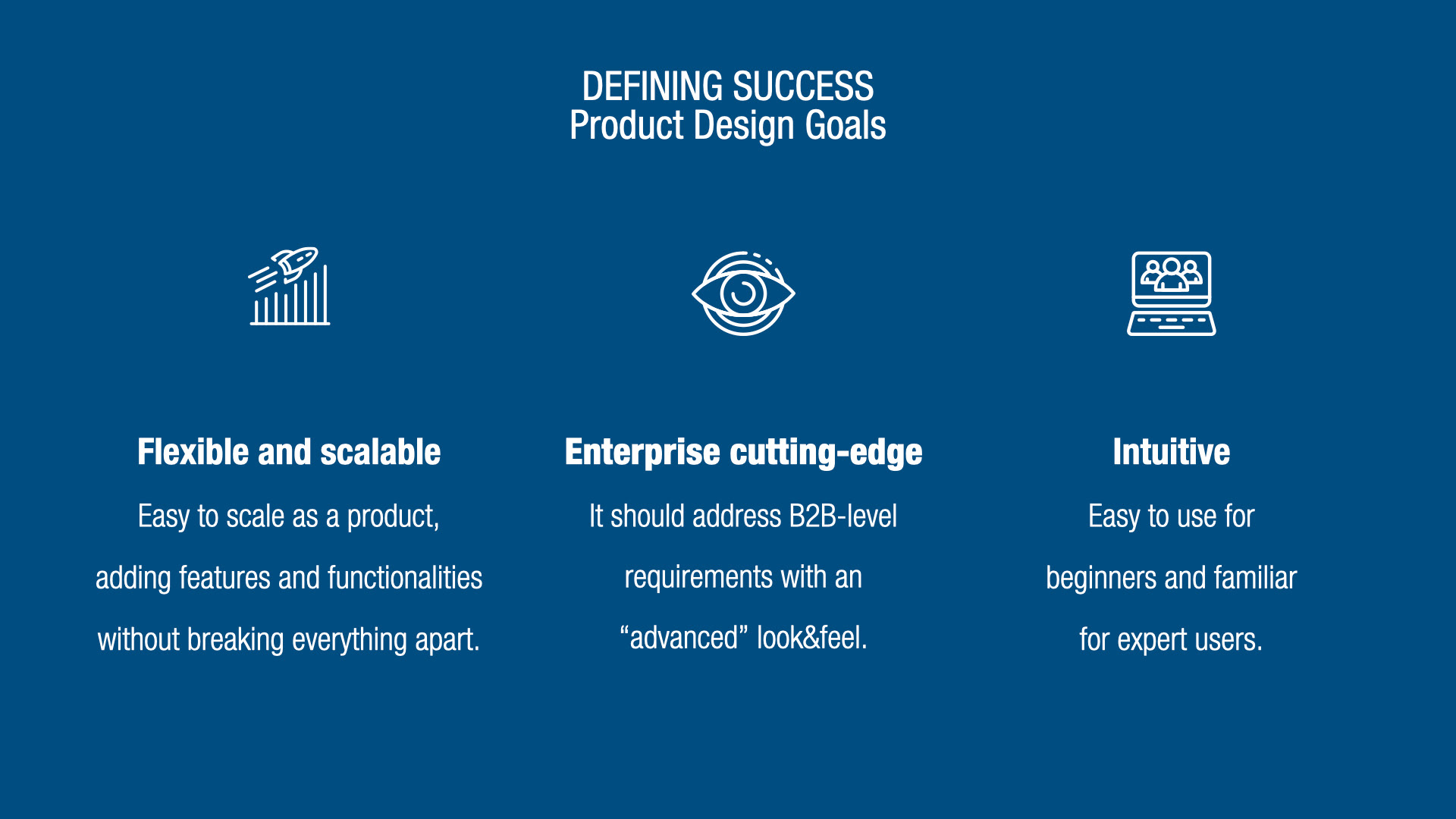
The platform's must-have feature is the capability to run Machine Learning, Computer Vision, and Natural Language Processing (NLP) jobs without having deep experience in the space.
The challenge from a UX perspective was to replicate extremely complex code-based tasks more efficiently through an intuitive GUI.
The challenge from a UX perspective was to replicate extremely complex code-based tasks more efficiently through an intuitive GUI.
RESEARCH
Right out of the gate, I faced multiple obstacles, like no process for building software, at a company with a very hard-core engineering culture. Even though I had the green light to utilize any available resource, I didn't even know who I needed to talk to. It's fair to say I started from zero in terms of any knowledge of Artificial Intelligence or Machine Learning.
"I must admit that in the beginning, it was very messy, with no processes in place and no design culture to refer to. But slowly, by listening closely to everyone around me, I was able to start moving one step at a time, even if that next step would take me two steps back for course correction."
Sergio Smirnoff
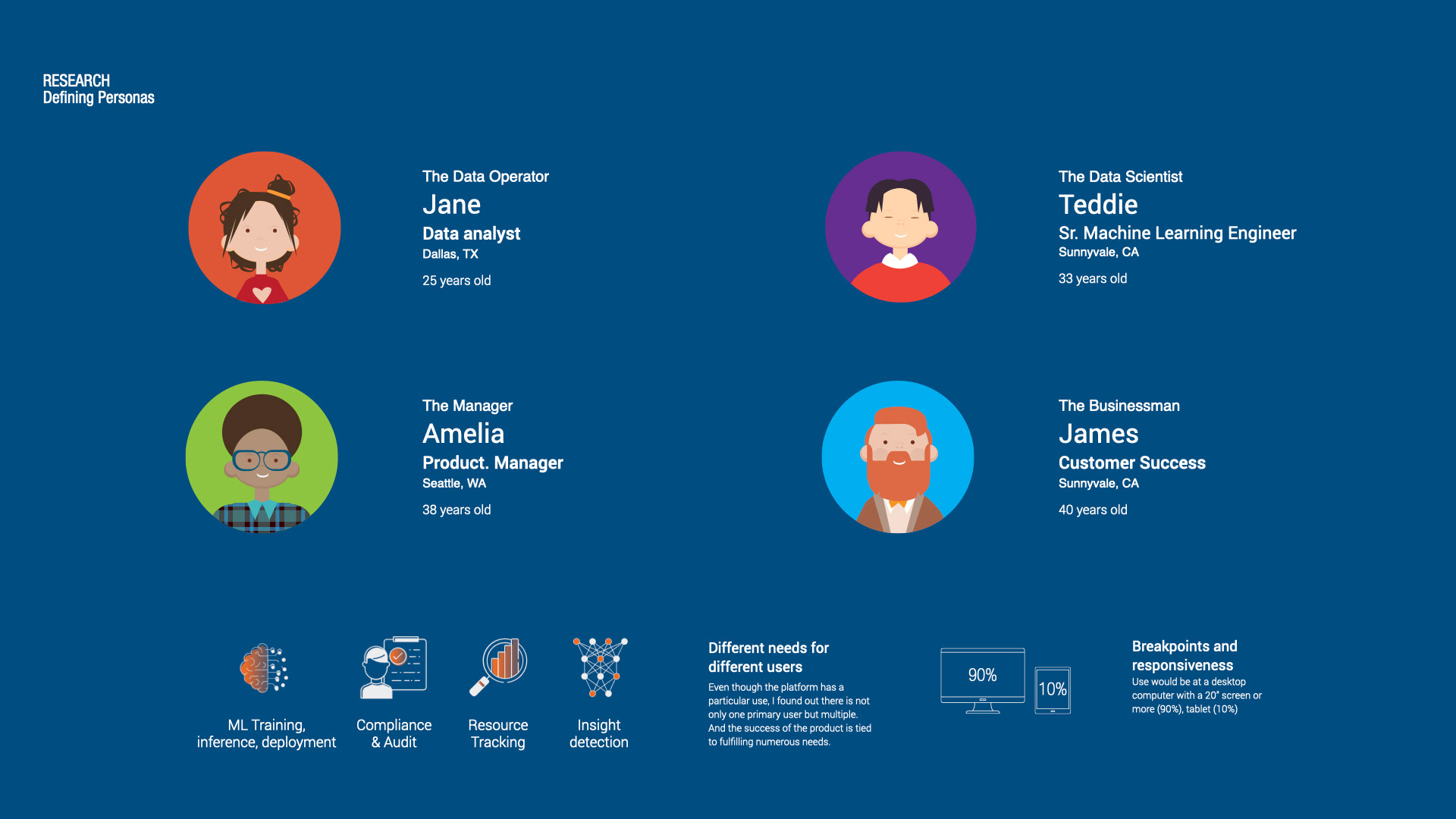
After identifying the right people to target, I began a series of qualitative research studies with internal stakeholders to understand the market and users' needs. The ultimate goal was to identify User Personas, their goals, and pain points to define the must-have features for an initial release and build a specific product for them.
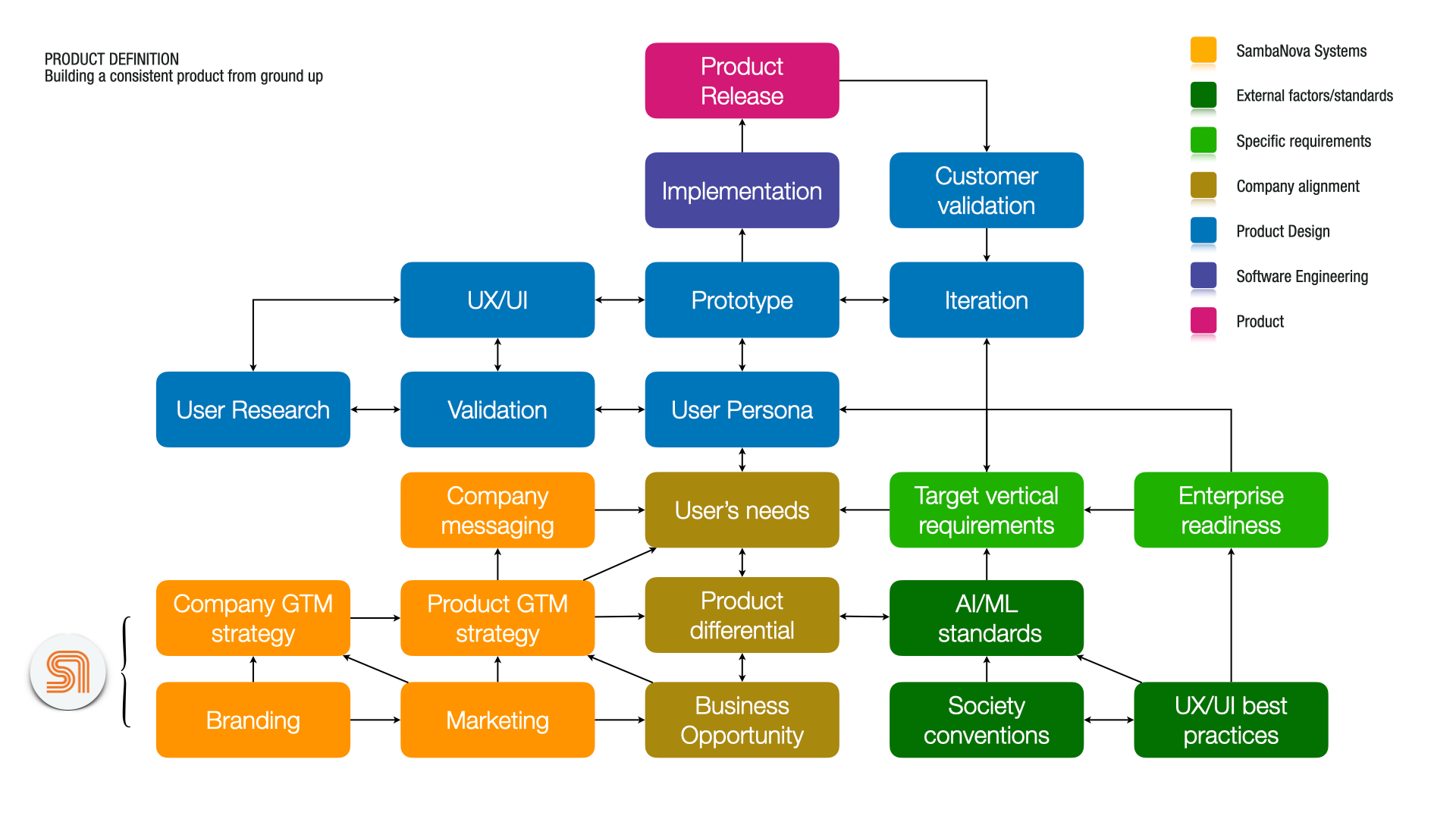
To understand the different layers of information and how they are interconnected, I created a Product Design Strategy Map in which every voice and insight is located based on its relevance and relationships.
The research was divided into stages, using different methods, and targeted people in critical positions across these layers from a user-operational and business standpoint. I embarked on the task of validating and aligning every stakeholder around the same vision, from the company and product go-to-market strategies to the target market and verticals, to the final users, understanding how each layer of information should impact the product itself and at what level.
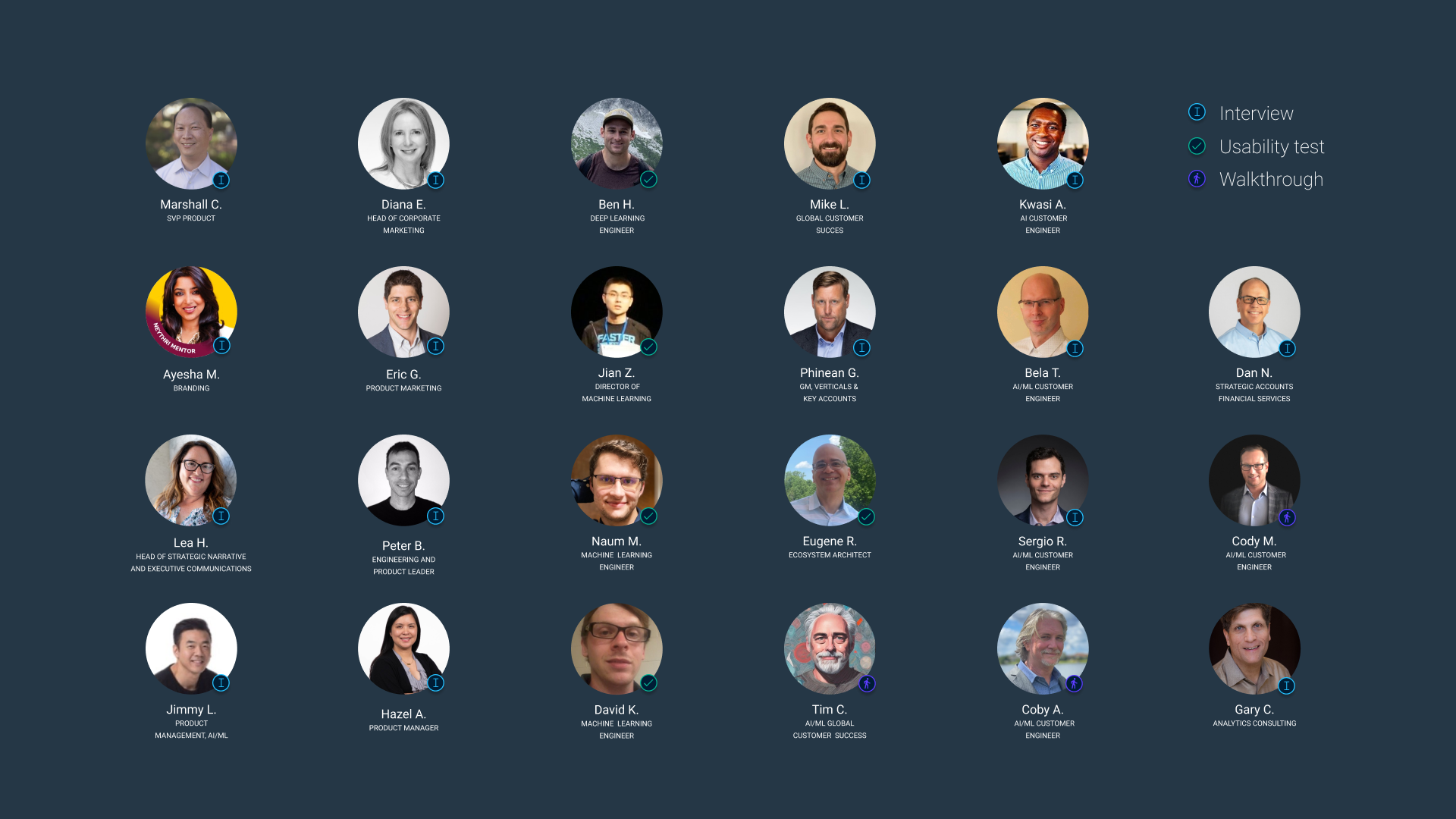
Interviews and research methodologies
• Card sorting for flow definition
• A/B testing for fonts and light-dark mode definition
• Usability tests for UI/UX validation
• Walkthroughs for intuitiveness validation and feedback gathering
• UX/UI competitive analysis
• Visual cultural references (gaming - sci-fi films)
• Interviews for:
- market/verticals requirements
- company go-to-market strategy
- product go-to-market strategy
- company's external messaging
- the company's branding concept and visual definition
- external messaging
- persona definition
- insights detection
• A/B testing for fonts and light-dark mode definition
• Usability tests for UI/UX validation
• Walkthroughs for intuitiveness validation and feedback gathering
• UX/UI competitive analysis
• Visual cultural references (gaming - sci-fi films)
• Interviews for:
- market/verticals requirements
- company go-to-market strategy
- product go-to-market strategy
- company's external messaging
- the company's branding concept and visual definition
- external messaging
- persona definition
- insights detection
The usability tests focused on three core questions: Could a non-expert navigate the platform without training? Did the interface feel aligned with SambaNova's brand? And what was the learning curve compared to CLI-based workflows?
KEY FINDINGS:
Users unfamiliar with ML platforms were able to complete core tasks after a single 2-minute orientation.
The biggest friction points were terminology (ML-specific language needed simplification) and information hierarchy (users needed clearer visual cues to distinguish job status from job configuration).
Both informed the final IA restructure.
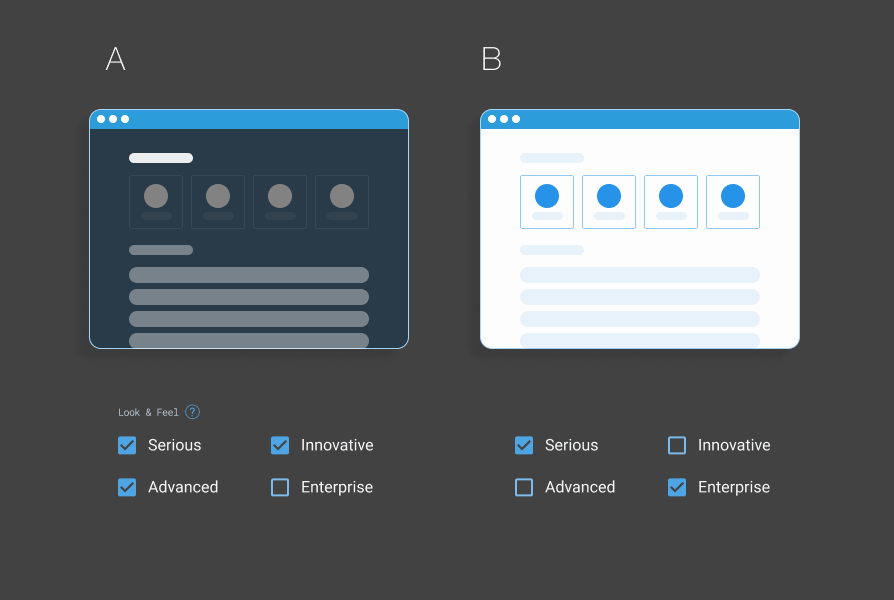
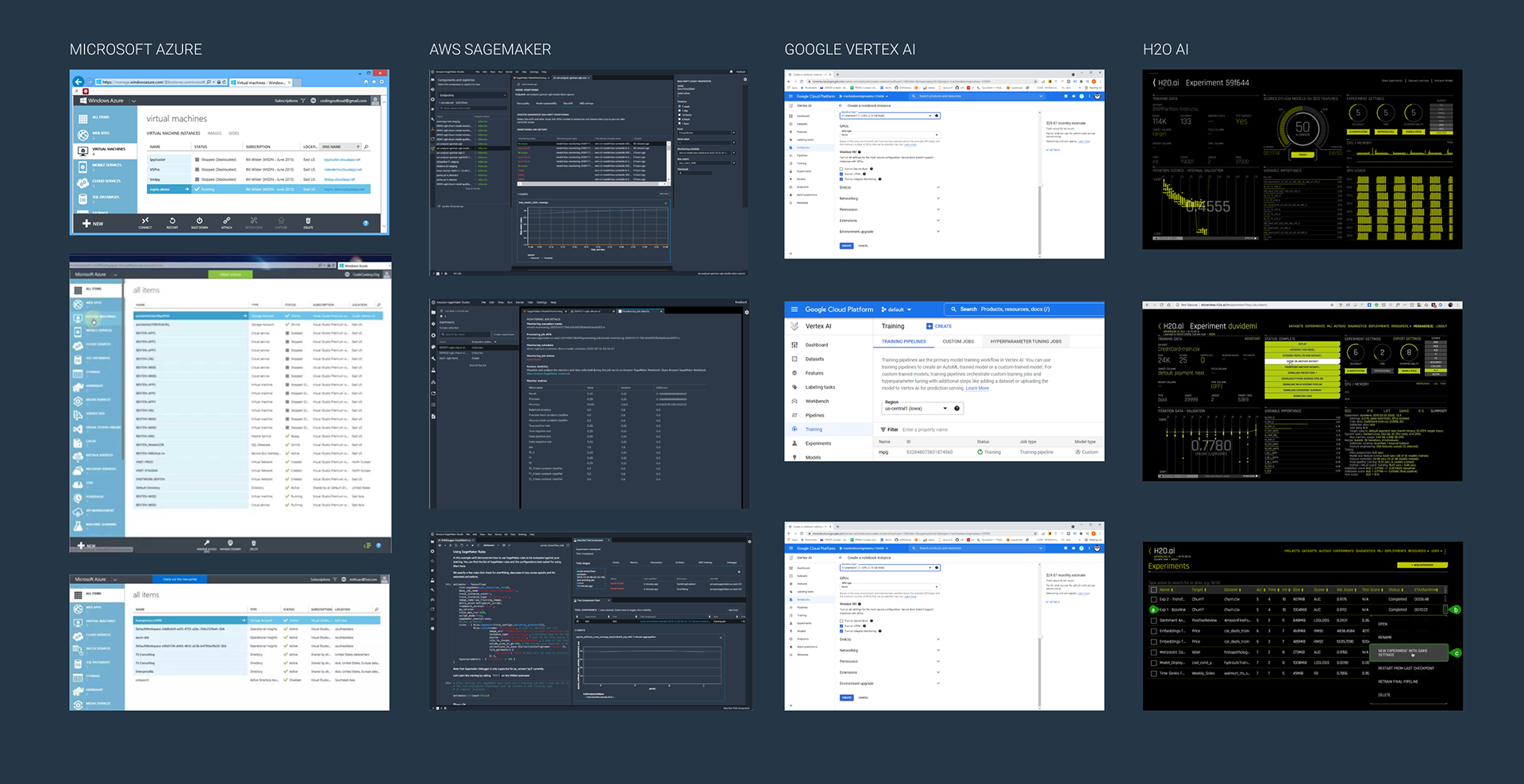
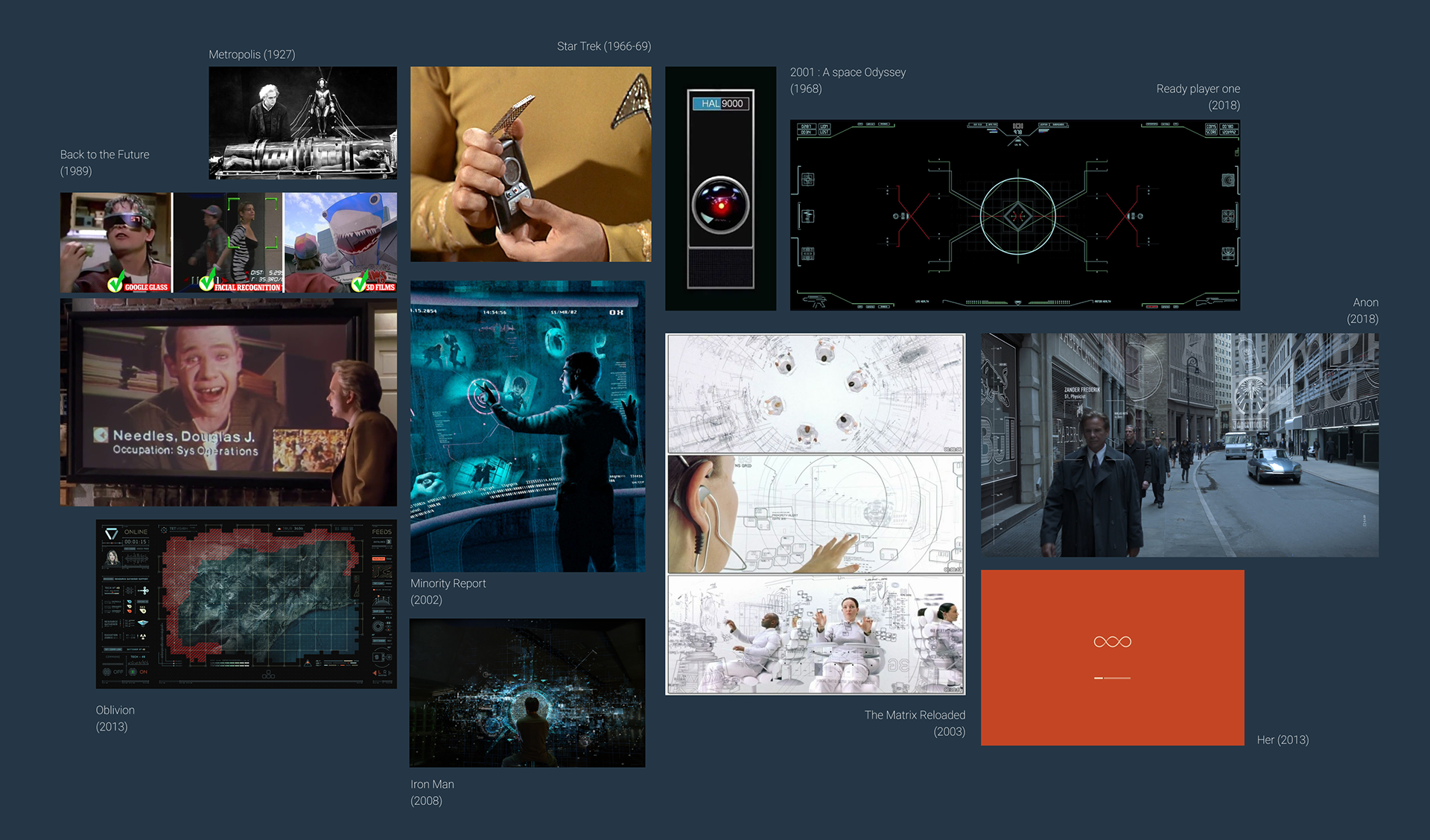
Color low-fi A/B testing, Competitive analysis, and film GUI references
UNDERSTANDING THE USERS
I defined experience maps, low-fidelity artifacts, and the initial workflow, which data scientists validated through card-sorting research to confirm their working methods.
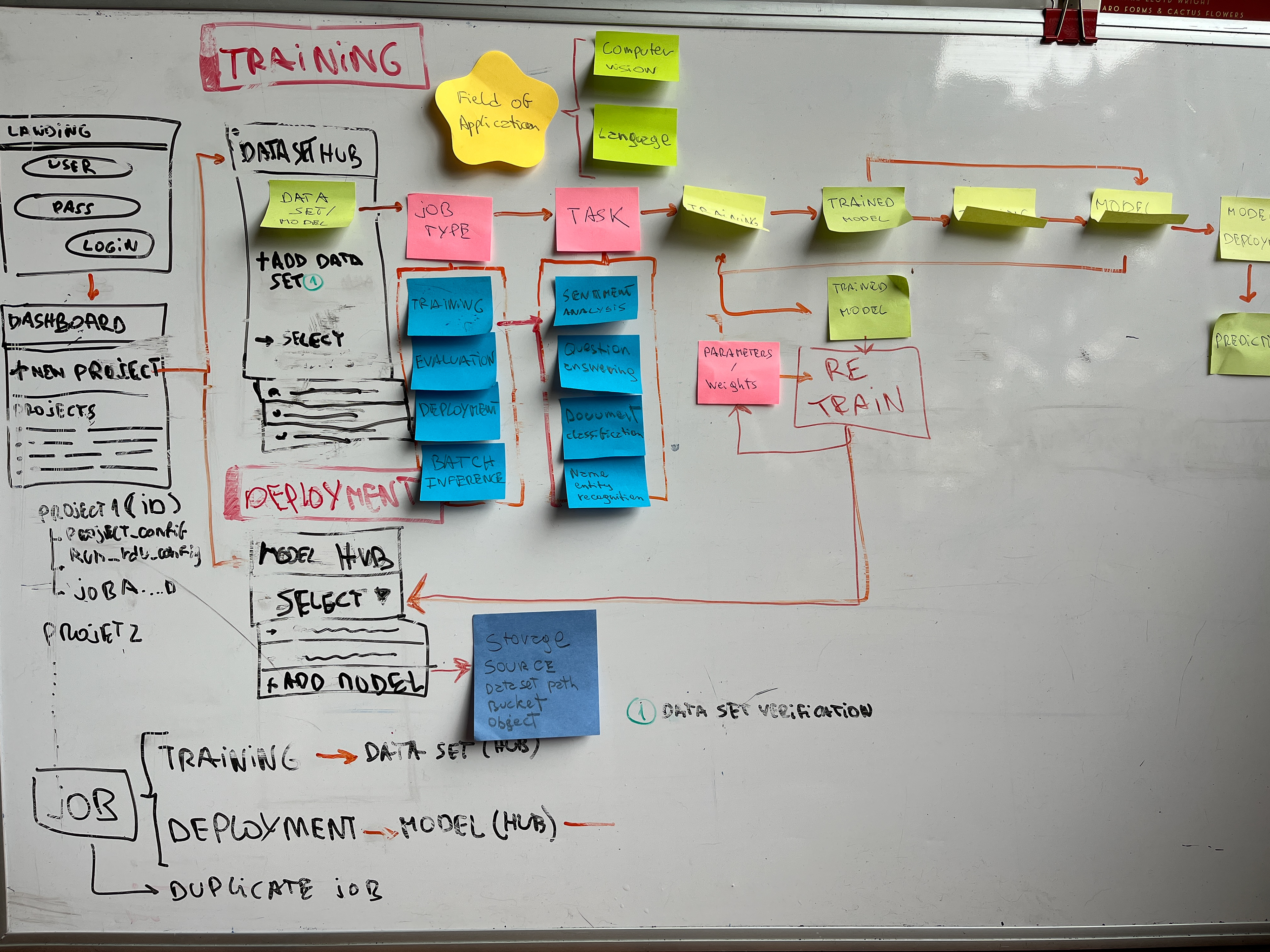
Whiteboarding session to define the workflow.
After gathering multiple stakeholder insights, different personas were identified, along with enterprise readiness and requirements across different industries and verticals.
I defined AI/ML alignment in terms of wording and best practices.
THE PROCESS
When I joined SambaNova Systems, they had created some very early-stage flows, UI, and UX. Even after the research, the findings validated some of the assumptions, the flows, and the Information Architecture required a full restructuring.
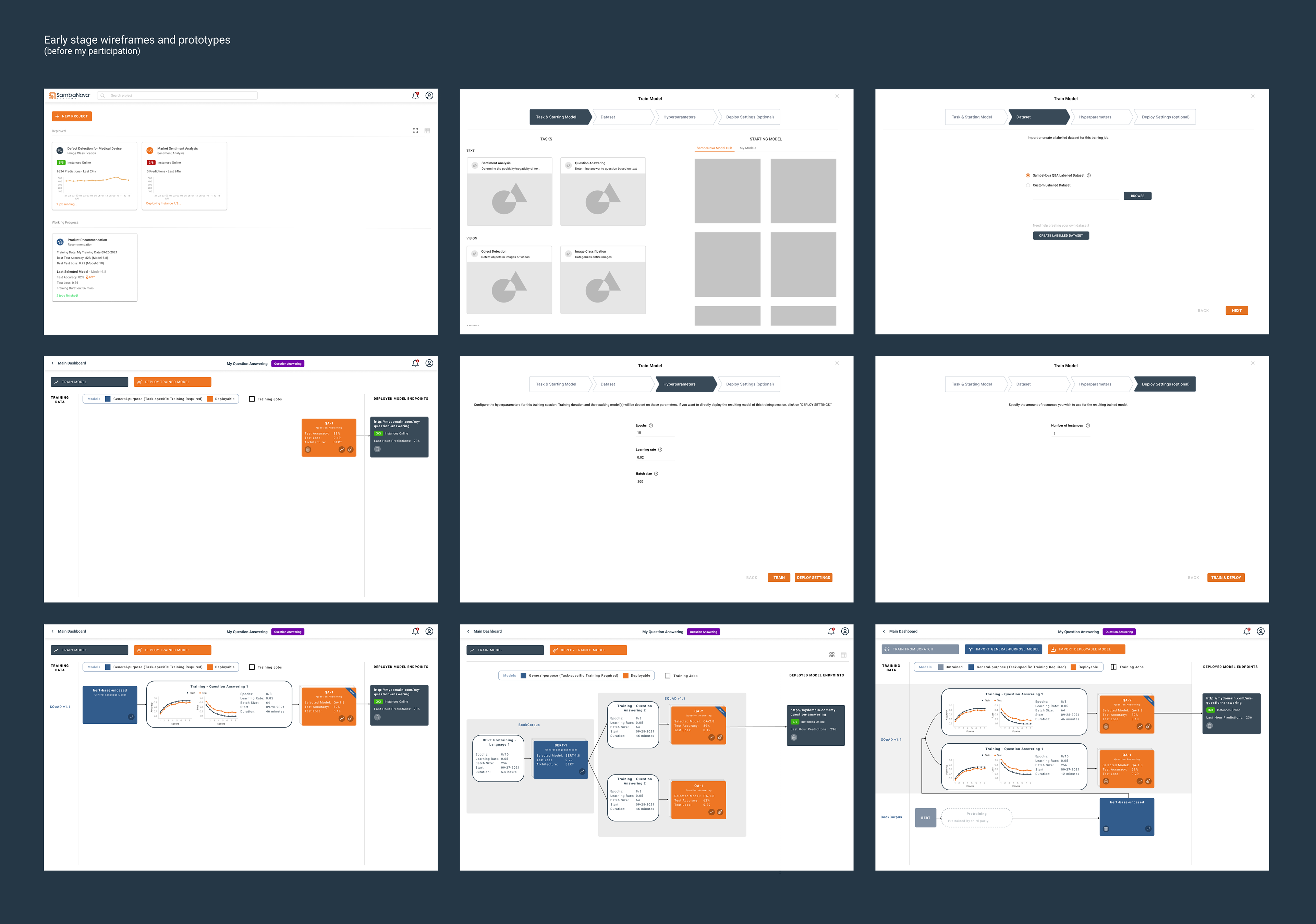
Early-stage wireframes and flows.
From the interviews with the C-Suite, I learned that there would be other products and projects that would require UI. With that in mind, I decided to create a Design System with Master Components to standardize screen development, ensure cohesiveness across products, and speed up the process. The Company's GTM (go-to-market) strategy was to project a unique look and feel for every asset, and my task was to balance that visual style at the product level by incorporating the company's visual style into the products. The critical part was to define which elements from the Branding Guidelines could be applied and which required a product design approach, such as font and color palette application.
I grew this Design System from basic elements to a complex library of components and rules for building software. From color applications to different buttons, inputs, dropdowns, and selectors, to responsive breakpoints and rules for creating screens and flows, I put together a range of scenarios and options for junior designers and front-end engineers.
I built seamless experiences almost without supervision, with only a final design QA review.
THE TYPEFACE SELECTION
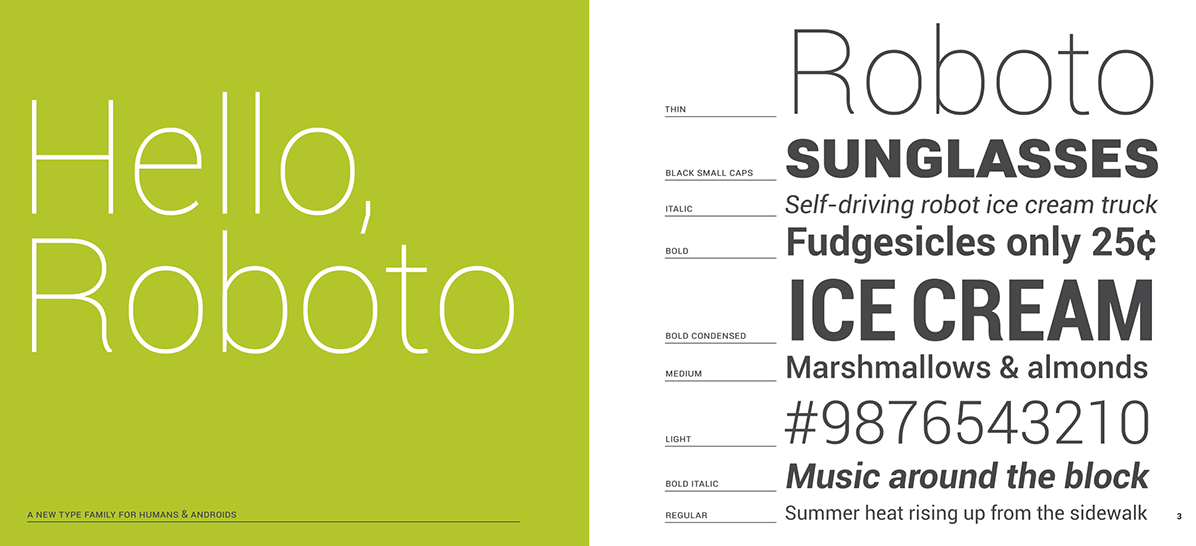
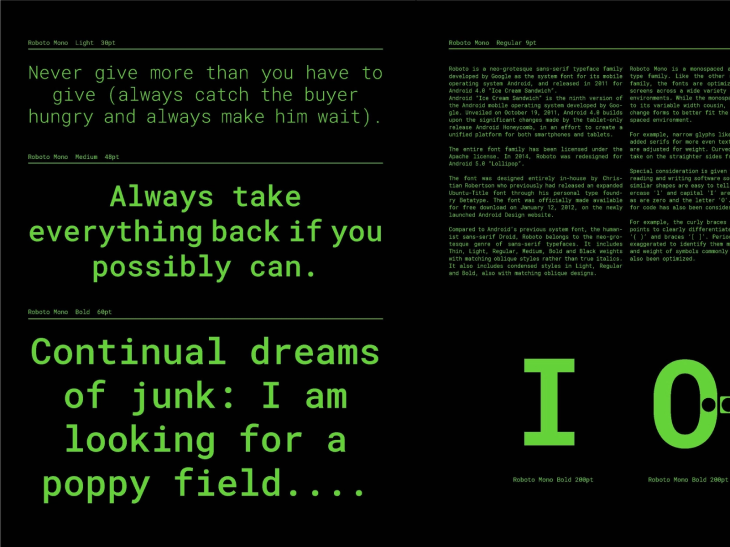
SambaNova's brand fonts, Century Gothic and Avant-Garde, were designed for print, not screens, and their 80s-era geometry felt misaligned with the product's forward-looking positioning. I led a structured typeface evaluation, compiling a comparative report on Google Fonts candidates and scoring them on screen readability, monospace availability for data display, and licensing terms.
The decision: Roboto for its extensive variable range and small-size legibility, paired with Roboto Mono for all data visualization contexts, giving the interface a technical, computing-native feel without sacrificing usability.
THE DESIGN SYSTEM
Building on Material Design as a foundation, I created SambaNova's first design system from scratch in Figma, purpose-built for enterprise AI software and designed to scale across multiple products from day one.
The system covered five core layers:
• Foundations: Color tokens mapped to both brand and functional states (error, warning, success, neutral), typography scale using Roboto and Roboto Mono, spacing and grid rules for data-dense enterprise layouts
• Components: 40+ master components including buttons, inputs, dropdowns, selectors, tables, cards, and data visualization elements, each with light/dark mode variants and interactive states
• Patterns: Reusable screen templates for the three core ML workflow stages (configuration, execution, results), reducing design-to-engineering handoff time significantly
• Documentation: Specifications and usage rules written for both junior designers and front-end engineers, enabling the team to build new screens without my direct involvement.
As the team grew, I hired and onboarded two junior designers, establishing the design system documentation and component guidelines as their primary onboarding resource, enabling them to contribute to new screens independently within their first two weeks.
• Governance: Defined which brand elements from SambaNova's marketing guidelines could carry into product UI and which required product-specific interpretation, a critical alignment decision that prevented visual inconsistency across channels
The system became the foundation for SambaStudio and every subsequent product SambaNova built, providing the engineering team with a reliable source of truth from the first commit to launch.
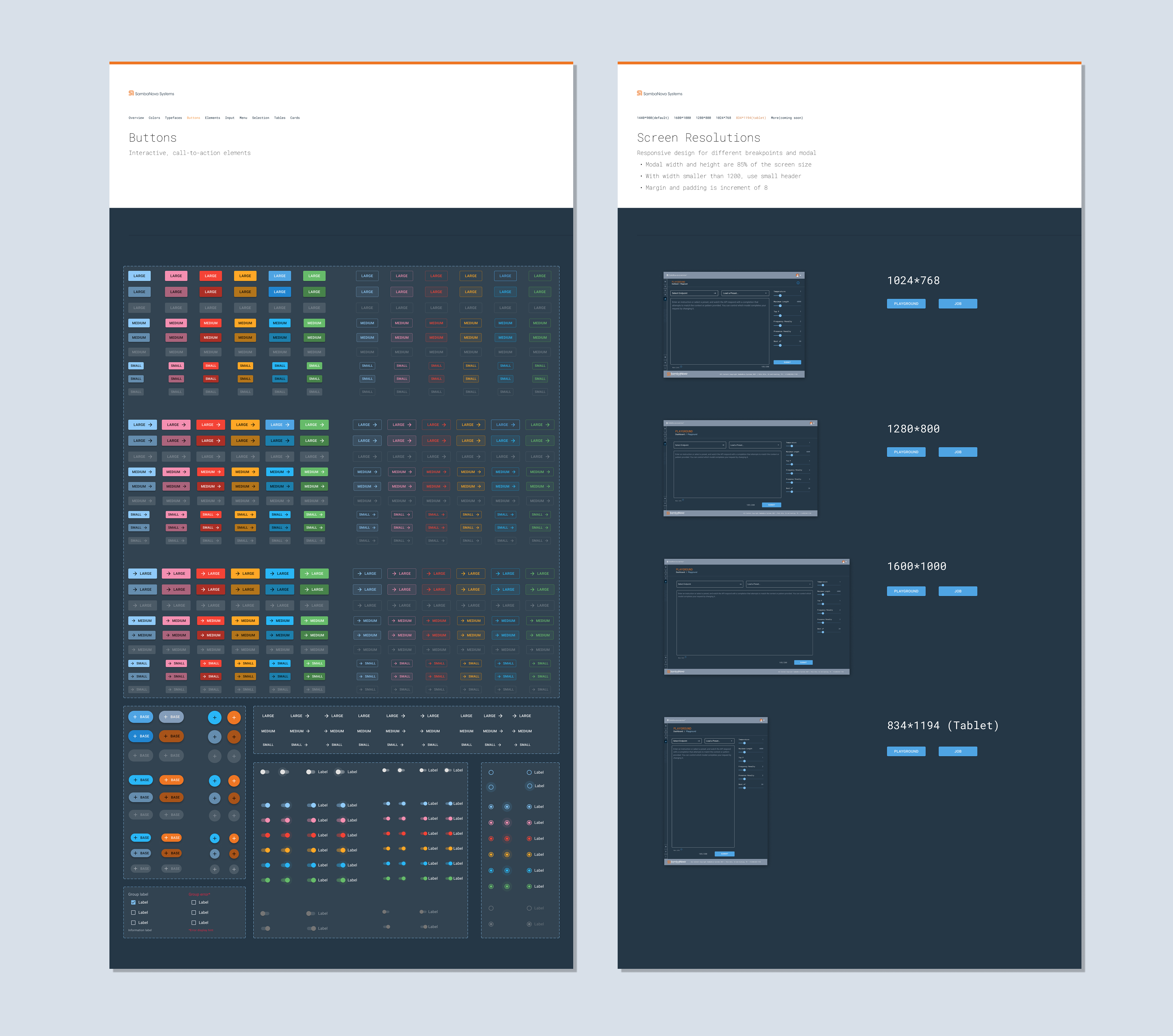
A couple of pages from SambaNova's Design System. They are organized into categories such as Color, Typefaces, Buttons, Interactive elements, Inputs, Menus, Selections, Tables, Cards, etc.
THE SOLUTION
The solution centered on one principle: replicate the mental model of CLI-based ML workflows in a visual interface, so data scientists could work the way they already think without writing a single line of code.
I designed SambaStudio around three core workflow stages: configuration, execution, and results, each mapped directly to how data scientists structure their work in terminal environments. The information architecture was validated through Figma prototypes tested with data scientists who had no prior exposure to the platform.
The results were clear: after a 2-minute orientation, participants completed core ML tasks without supervision or additional training, with an estimated 70%+ reduction in time and complexity compared to CLI-based workflows. The key insight from testing was that terminology mattered as much as layout; ML-specific language needed to feel native, not translated.
After aligning Branding, Marketing, and Product behind a single visual system, SambaStudio shipped in February 2023, 14 months from my first day, zero-to-one, with no design precedent within the company to build from.
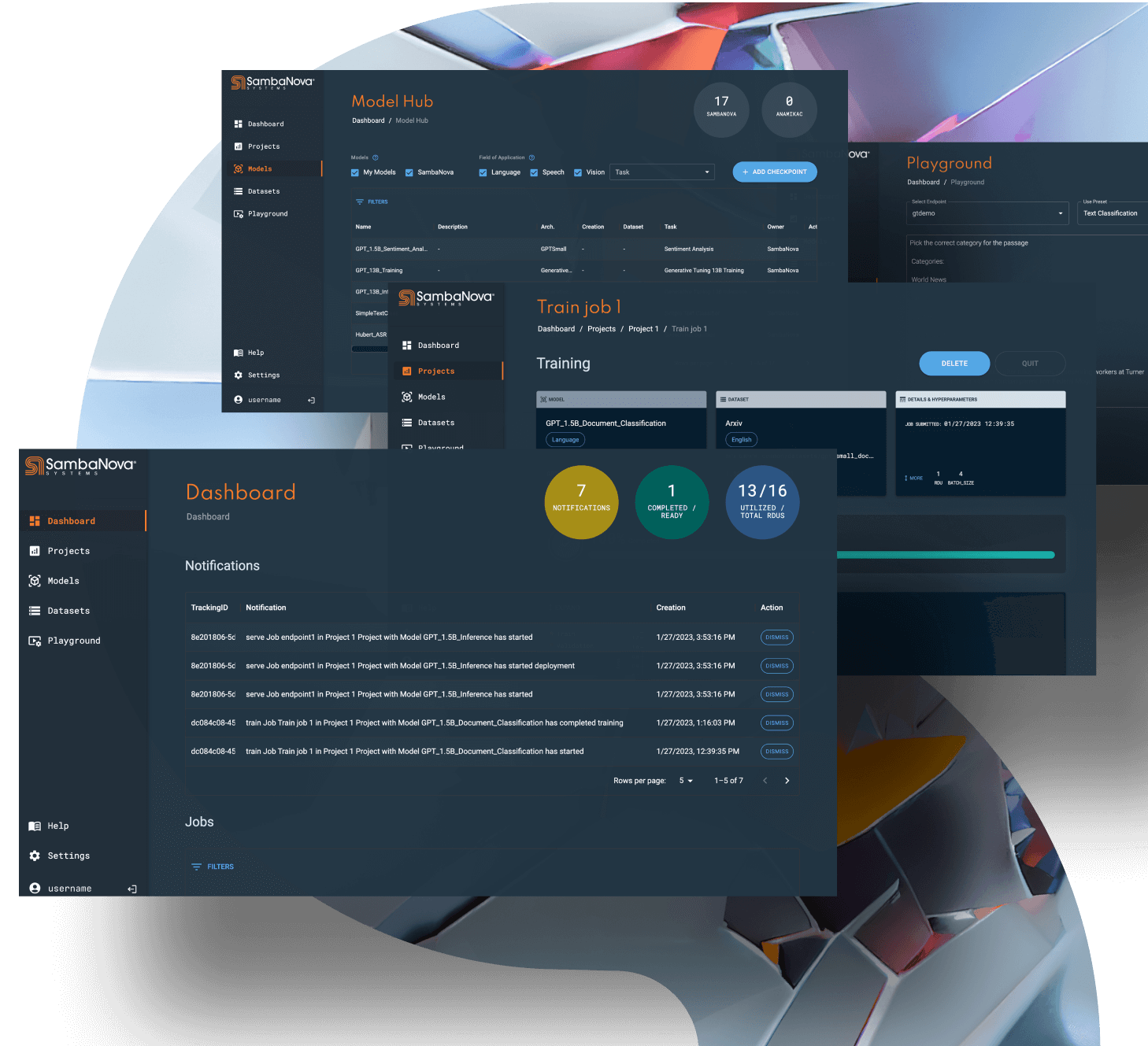
Before SambaStudio: hours of PyTorch scripting in a command-line interface, accessible only to expert data scientists.
After: an estimated 70% reduction in time-to-experiment, and a platform that any technical user could operate after a 2-minute orientation.
Samba Suite release video
TEAM MEMBERS
Shuya Zhan
Product Designer
Product Designer
Bill Bain
Content Strategist
Content Strategist